KUCHIPUDI
Kuchipudi is one of the eleven major Indian classical dances. It originated in a village named Kuchipudi in the Indian state of Andhra Pradesh.
Kuchipudi is a dance-drama performance, with its roots in the ancient Hindu Sanskrit text of Natya Shastra. It developed as a religious art linked to traveling bards, temples and spiritual beliefs, like all major classical dances of India. Evidence of Kuchipudi's existence in an older version are found in copper inscriptions of the 10th century, and by the 15th century in texts such as the Machupalli Kaifat. Kuchipudi tradition holds that Tirtha Narayana Yati – a sanyassin of Advaita Vedanta persuasion, and his disciple, an orphan named Siddhendra Yogi, founded and systematized the modern version of Kuchipudi in the 17th century. Kuchipudi largely developed as a Hindu god Krishna-oriented Vai shnavism tradition, and it is most closely related to Bhagavata Mela performance art found in Tamil Nadu.
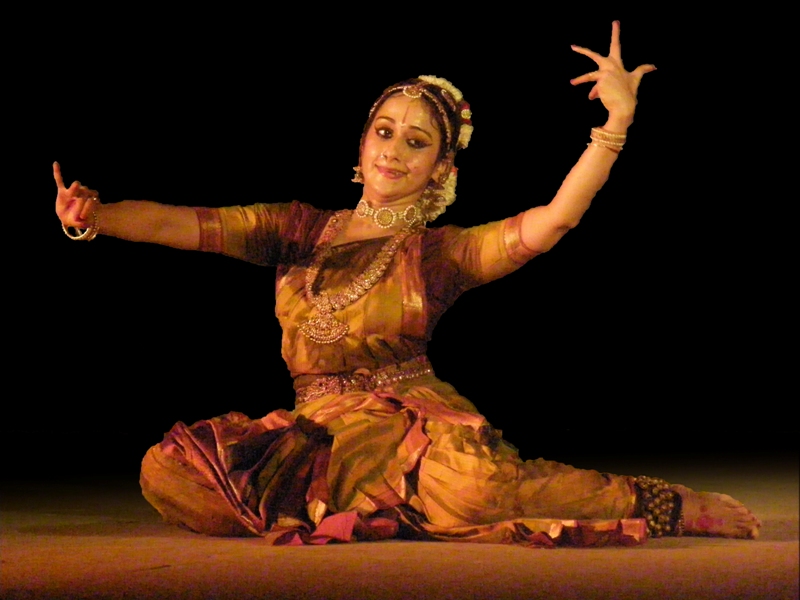
The Kuchipudi performance usually begins with an invocation. Then, each costumed actor is introduced, their role stated, and they then perform a short preliminary dance set to music (dharavu). Next, the performance presents pure dance (nritta). This is followed with by the expressive part of the performance (nritya), where rhythmic hand gestures help convey the story. Vocal and instrumental Carnatic music in the Telugu language accompanies the performance. The typical musical instruments in Kuchipudi are mridangam, cymbals, veena, flute and the tambura.
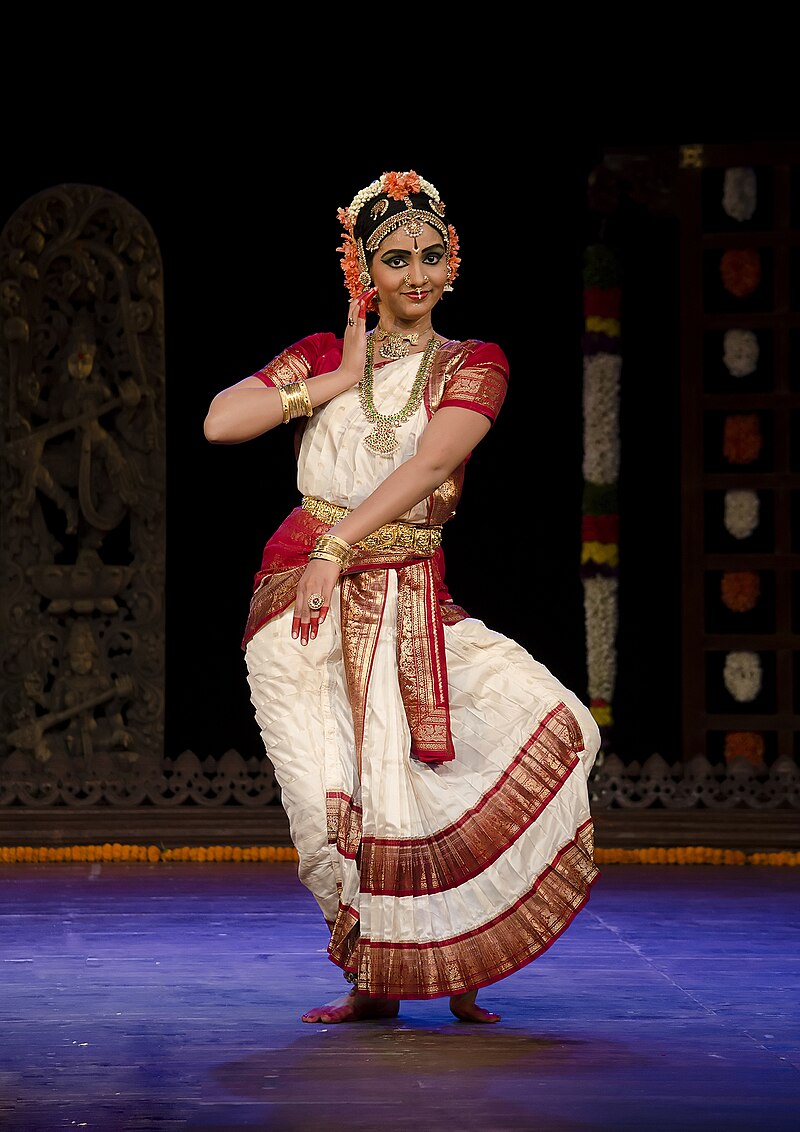
The popularity of Kuchipudi has grown within India, and it is performed worldwide.
Costumes
The traditional Kuchipudi was performed by all males troupe. A dancer in a male role would be in Angivastra, also known as Bagalbandi, wear a dhoti (a single pleated piece of cloth hanging down from the waist).A dancer in a female role would wear a Sari with light makeup.
Modern productions retain the male dress, but are more elaborate and Bharatanatyam-like for the female roles. Women artists wear a brilliantly colorful Sari (or a body fitting dress) with a pleated fan stitched in front to help highlight the exacting footwork. The end of the wrapped Sari is held fast under a light metallic (golden or brass) belt at waist. A Kuchipudi artist braids her hair somewhat differently than a Bharatanatyam artist, to reflect the regional traditions, yet wearing flowers are common. Both have symbolic elements embedded in their hair and face jewelry, such as the Vedic symbolisms for the sun and the moon, the soul and the nature, and she sometimes sets her hairdo in the tribhuvana style which represents the three worlds. Her jewelry may include hair jewelry, ear, nose, armlets, necklaces and often a leather anklet piece with little bells (ghungroo). The forehead has a round red bindi or a symmetric tillaka, while the eyes are typically ringed with black collyrium to ease the viewing of expressions by the audience.
Some special Kuchipudi plays may include unusual costumes and theatrics, such as round bottom water pot balanced on the head, dancing with gymnastics or stilt athletics. Other plays may include wing props, a transparent head sheet, or peacock feathered crown to identify the actor playing Krishna.

Repertoire
The repertoire of Kuchipudi, like all major classical Indian dance forms, follows the three categories of performance in the ancient Hindu text Natya Shastra. These are Nritta, Nritya and Natya.
- The Nritta performance is abstract, fast and rhythmic aspect of the dance. The viewer is presented with pure movement in Nritta, wherein the emphasis is the beauty in motion, form, speed, range and pattern. This part of the repertoire has no interpretative aspect, no telling of story. It is a technical performance, and aims to engage the senses (prakriti) of the audience.
- The Nritya is slower and expressive aspect of the dance that attempts to communicate feelings, storyline particularly with spiritual themes in Hindu dance traditions. In a nritya, the dance-acting expands to include silent expression of words through gestures and body motion set to musical notes. The Kuchipudi actor articulates a story (particularly of Krishna) or a spiritual message. This part of a repertoire is more than sensory enjoyment, it aims to engage the emotions and mind of the viewer.
- The Natyam is a play, typically a team performance, but can be acted out by a solo performer where the dancer uses certain standardized body movements to indicate a new character in the underlying story. A Natya incorporates the elements of a Nritya. Kuchipudi, in its history relied on a team a dance-actors, while in modern times Kuchipudi productions include solo or duo performances.


