MOHINIYATTAM

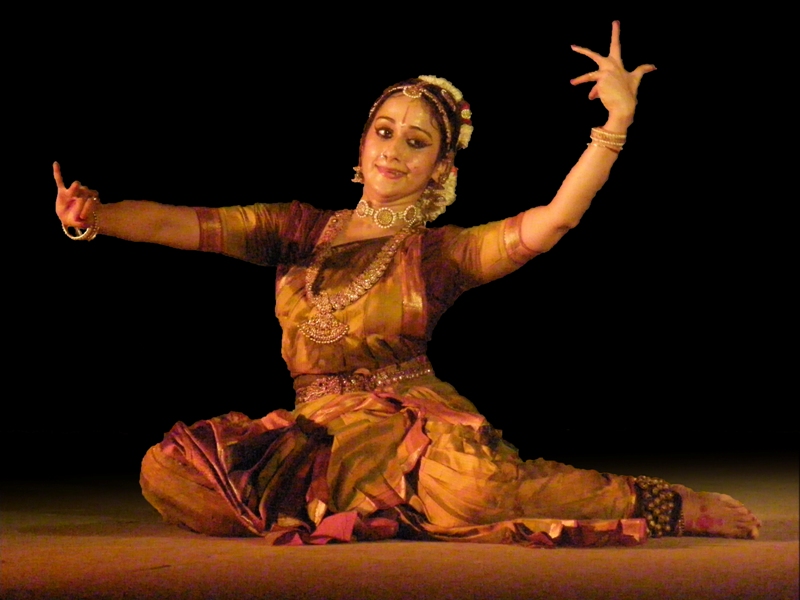
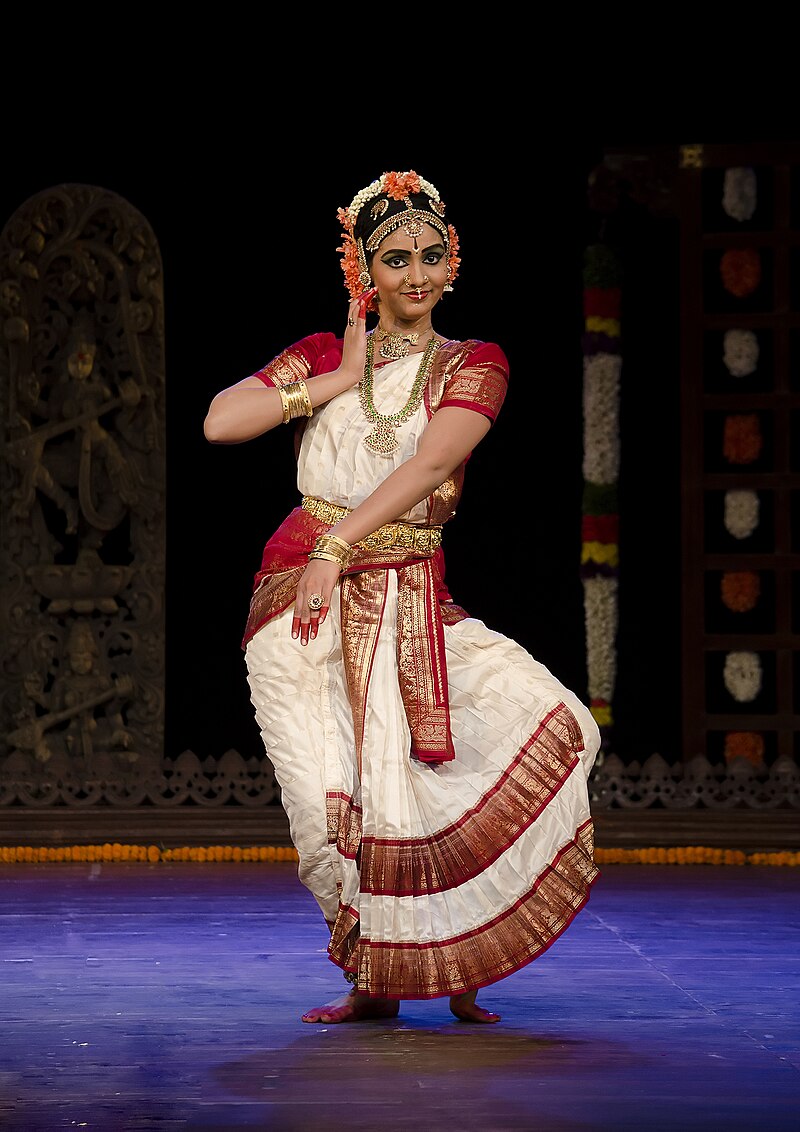
Mohiniyattam, also spelled Mohiniattam, is one of the eight classical dances of India that developed and remain popular in the state of Kerala. The other classical dance form from Kerala is Kathakali. Mohiniyattam dance gets its name from the word Mohini – a mythical enchantress avatar of the Hindu god Vishnu, who helps the good prevail over evil by deploying her feminine powers.
Mohiniyattam's roots, like all classical Indian dances, are in the Natya Shastra – the ancient Hindu Sanskrit text on performance arts. However, it follows the Lasya style described in Natya Shastra, that is a dance which is delicate, eros-filled and feminine. It is traditionally a solo dance performed by women after extensive training. The repertoire of Mohiniyattam includes music in the Carnatic style, singing and acting a play through the dance, where the recitation may be either by a separate vocalist or the dancer herself. The song is typically in Malayalam-Sanskrit hybrid called Manipravalam.
HISTORY

The earliest mention of the word is found in the 16th-century legal text Vyavaharamala, but the likely roots of the dance are older. The dance was systematized in the 18th century, was ridiculed as a Devadasi prostitution system during the colonial British Raj, banned by a series of laws from 1931 through 1938, a ban that was protested and partially repealed in 1940. The socio-political conflict ultimately led to renewed interest, revival and reconstruction of Mohiniyattam by the people of Kerala, particularly the poet Vallathol Narayana Menon.
REPERTOIRE
Mohiniyattam is a lasya subgenre of dance, performed in the Kaisiki vritti (graceful style), as discussed in ancient Indian performance arts texts such as the Natya Shastra. More specifically, it is a dance that excels in Ekaharya Abhinaya form, that is a solo expressive dance performance aided by singing and music. The dance includes nritta (pure dance, solo), nritya (expressive dance, solo) and modern productions sometimes include natya(play, group dance):
- The Nritta performance is abstract, rhythmic aspect of the dance that appears early and at the end of the dance repertoire. The viewer is presented with pure movement, wherein the emphasis is the beauty in motion, form, speed, range and pattern. This part of the repertoire has no interpretative aspect, no telling of story.
- The Nritya is the expressive aspect of the dance that attempts to communicate a storyline, with emotions and feelings, with spiritual themes. In a nritya, the dance-acting (Abhinaya, Vaittari) expands to include silent expression of words through hand and facial gestures and body motion set to musical notes. The dancer articulates a legend or a spiritual message, aiming to engage the emotions and mind of the viewer.
The basic posture of Mohiniyattam is parted feet, knees bent outwards, an erect upper torso, gentle 8-shape side to side swaying of body along with hips (Ati Bhanga). The footwork is soft, sliding and synchronous with the musical beat and acting. The body movement is sometimes described in terms of calming images of nature as the swinging of the palm leaves, and the gentle undulating of ocean waves.
The basic dance units in Mohiniattam are known as atavus or atavukal, and these are grouped into four: Taganam, Jaganam, Dhaganam and Sammisram. The hand and facial gestures of the dance follow the classical text of Hastha Lakshanadeepika, which has elaborate description of mudras.
SEQUENCE

The repertoire sequence of Mohiniyattam is similar to that of Bharatanatyam, and contains seven items that are performed to a structure described in classical dance texts: Cholkettu (invocation, but starts with offering reverence to a goddess Bhagavati and ends with a prayer to Shiva), Jatisvaram or more precisely Swarajeti, Varnam (a play wherein she embeds a mimicry for distraction while communicating the underlying story or message), Padam (song), Tillana (dancer's interpretation of melody the musician create), Shlokam and Saptam.
COSTUMES

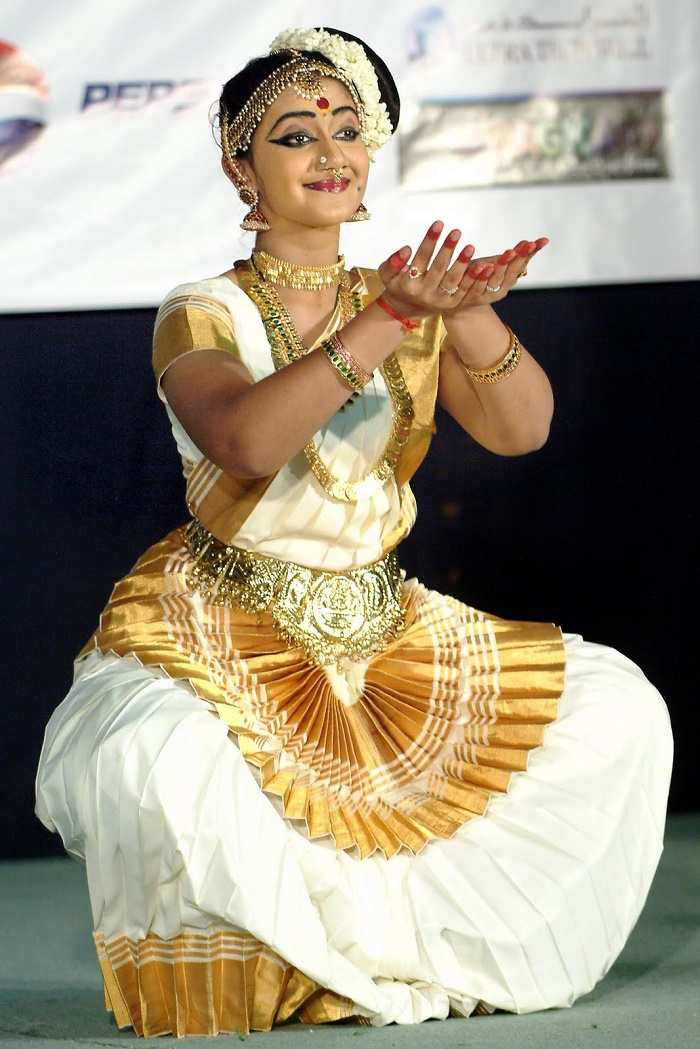
The costume includes plain white or off-white such as ivory or cream colored sari embroidered with bright golden or gold laced colored brocade (similar to a ceremonial Kasavu saree). She wears a fitted choli (blouse) matching the sari, below which at the waist is a golden belt which tucks in the end of the sari, and highlights the waist. In front of the saree, below the belt is pleated sheet with concentric bands in gold or saffron colors, which allow freedom of movement and assist in visually communicating the mudra to distant audience.
The dancer wears relatively simple jewelry and no masks, in contrast to the other major classical dance of Kerala called Kathakali. Her jewelry typically includes items on fingers, wrists, neck and ears (which may have bells). The face makeup is natural, but lips are brilliant red, she has the Hindu tikka (Gobi) on her forehead and her eyes are lined to help prominently highlight the eye movements during the dance. Her ankles are adorned with leather straps with bells (chilanka), feet and fingers colored red with natural dyes. Her hairdo is gathered and tied into a smooth tight round chignon on one side of her head (typically left) and the bun then ringed with fragrant flowers (typically jasmine mulla).